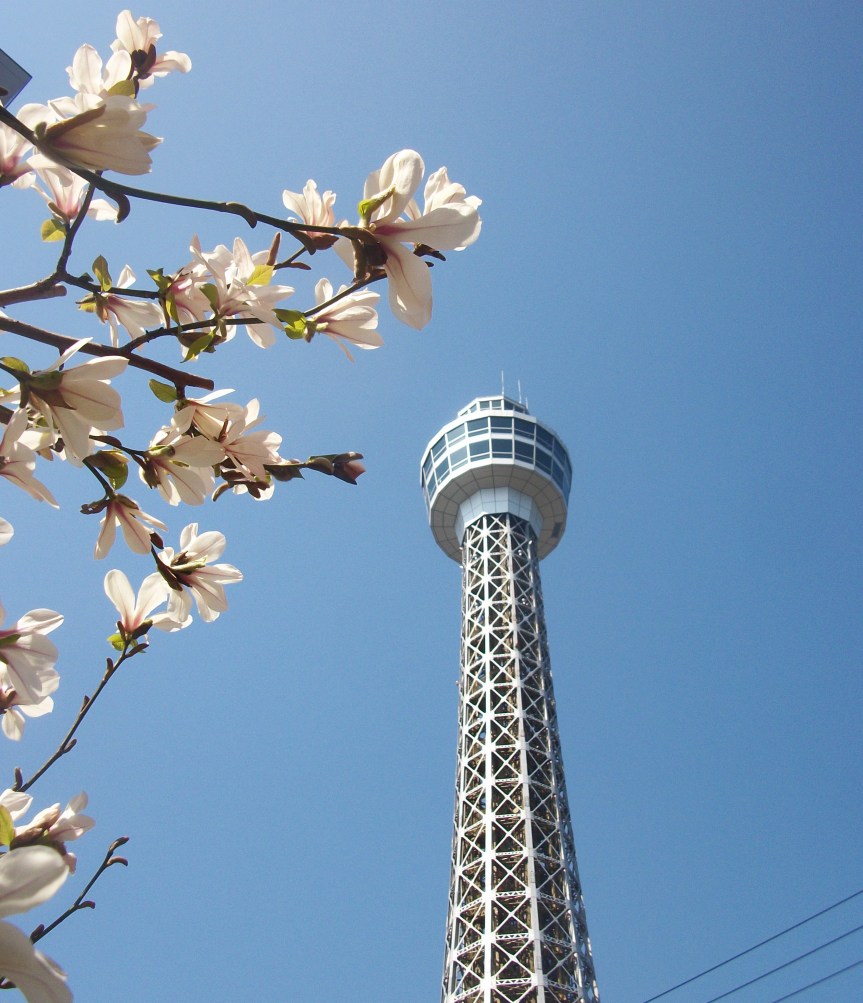
Takeover Tokyo (Nagoya & Yokohama too)

I finally leave Kanagawa Prefecture this weekend, where I’ve spent the past five weeks exploring Yokohama and Tokyo — before that, a few days in Nagoya. And I’m really sad to be leaving. So sad, that I was supposed to leave Yokohama a week ago… but I was having such a wonderful time, I had to stay a bit longer.

NAGOYA

When I landed in Nagoya, I landed with my Aunt who is from the Philippines, but lives in Japan. It was nice having a tour guide to start off my visit. We went to the Kirin Brewery in Kiyosu, and they have a factory tour which is free, but reservations need to be made ahead of time. They have locations and offer tours throughout Japan, so look them up to see if one is near you! I highly recommend it. The entire tour was in Japanese (as was their website), but they had an English pamphlet you could use to follow along the tour.

In Nagoya, I also visited a cat cafe. If you’ve read one of my previous blog posts raving about the cat cafe in Tianjin, you know that this was such a delight for me. The cat cafe here operated a little differently than the one in Tianjin, though. Firstly, there were a LOT more cats. The ladies had one room, and the gents another. 27 cats in total. 27. Cats. Cuddling wasn’t allowed 😦 and drinks had to be consumed separately from the kitties. There was an entrance fee, and you paid for a certain block of time to spend with the kitties, but you could drink as much coffee, milk tea, and even as much soup as you wanted! And did I mention there were cats??!

Now, if you ever find yourself in Nagoya on a Friday night, check out Club Orca. Friday evenings happen to be ladies night. No cover, free drinks… and get this: a dessert bar. If a club doesn’t have a dessert bar, they’re doing it wrong. Club Orca has set the standards high… in China too, expats got the VIP treatment at clubs. Basically, Asia knows how it’s done.

TOKYO

I don’t even know where to start with Tokyo. There’s so much to do!!! My first weekend here, I reunited with some pals I met while working at Disney and hadn’t seen in a year and a half, so taking on Tokyo that first week with friends was amazing.

Tokyo is a central business district, so while it has it’s fair share of skyscrapers and business suits, there were plenty of parks, gardens, and urban spaces, that sometimes I couldn’t believe I was in such a big city. I’m very lucky to be in Japan during cherry blossom season, so every park I’ve wandered through has greeted me with the sight and scent of sakura (as well as sakura flavored treats popping up in cafes and shops all over!)

If you’re in Tokyo around cherry blossom season, a few of my favorite parks and places to see blossoms have been in Inokashira Park (also home to the Ghibli Museum), within a neighborhood called Jiyugaoka (that is also famous for it’s sweets), and Naka Meguro at night, where cherry blossoms line the river, and are illuminated at night.

Of course while you’re in Tokyo, you need to witness the Shibuya Scramble Crossing at rush hour, admire the wicked fashion and relive the 90s in Harajuku (where you’ll find a Tamagotchi store), and possibly go up the Tokyo Tower. But, while you’re also in Shibuya, I also recommend walking the 30 or so minutes to a neighborhood called Ebisu, where you can enjoy ice cream in some amazing, and traditional Japanese flavors at a shop called Japanese Ice Ouca. They serve flavors from sweet potato to brown sugar matcha and sakura. Sit-in and help yourself to their green tea, or take it to go and check out the neighborhood.

Takeshita-dori in Harajuku is one of my favorite streets in all of Tokyo. Not only are there several shops where you can pick up a crepe filled with anything from custard to salmon (yes, even together should you wish), but some of the most fashionable youth of Tokyo grace the area (and on Sunday afternoons, Yoyogi Park is usually bustling with cosplayers). One of my favorite and most affordable “izakayas” or Japanese gastropubs is at the end of this street, along with a cookie shop where you can karaoke in-store for a free cookie.

The Tokyo Tower makes it’s way onto almost everyone’s “must-do” in Tokyo lists. But if you’re on a budget, there are other options to take in Tokyo’s skyline, surrounding areas, and still feel like you’re on top of the world. I frequented the Tokyo Government Municipal Building in Shinjuku a few times. Visits to both the North and South observatory are free (just take note of hours before you go!) Head up to these observatories and you’ll find yourself right in the middle of the skyscraper district.

It’s easy enough to visit a new place and hit all the popular tourists spots, but don’t be afraid to wander off the beaten path. Every person I’ve met in Tokyo & Yokohama, I’ve asked for their suggestions on their favorite places to visit in the area. I’m a huge fan of exploring a new place just by walking around, and so many of the recommendations I received ended up being for some of the neatest neighborhoods outside the city that were just as lively, but not overwhelmingly so.

If you get the chance, check out the three K’s: Kōenji, Kichijōji, and Kagurazaka. All are doable to explore within a half day’s time, but expect a different vibe depending on the time of day you stroll through the neighborhood. All three have a few pedestrian-only streets (save for the occasional bicycle) lined with shops selling everything imaginable (think drugstores, secondhand clothing, records, etc), and an array of snacks to enjoy (from organic donuts to cheese tempura curry balls and 500yen pizza), and izakayas to grab a drink in.

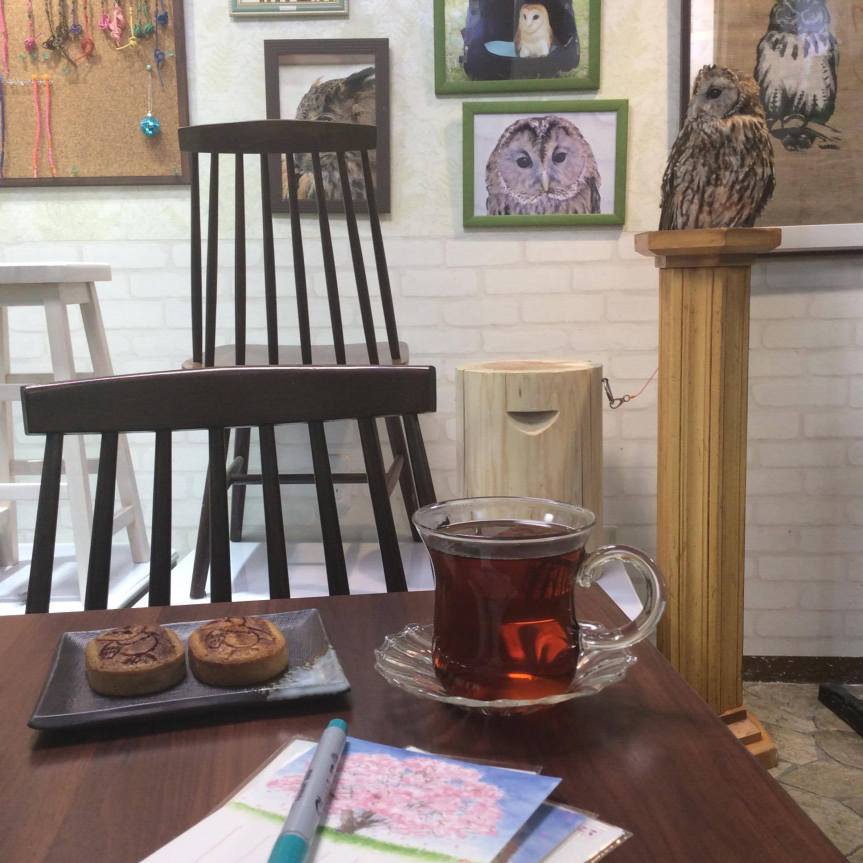
Whereas the people in the city, in their suits and polished shoes seem to always be in a rush, the people of the suburbs of Tokyo are a lot more relaxed, which lends itself to the overall chill vibe of these neighborhoods. One of the most special experiences to me was visiting Cafe Baron in Kōenji. Cafe Baron is an owl cafe. That’s right. An owl cafe. I guess I shouldn’t be surprised that such a thing would exist in Japan, which has a larger population of pets than children.

Along with owls that go by the names of John, Jack, Charlie, and Baron (the barnyard owl who the cafe is named after), the cafe also houses some pet mice and komodo dragons. You can order everything from curry dishes to tea and biscuits with cute little owls on them at this cafe. The owner speaks really good English, and he was really welcoming, and knowledgeable about all things owls. He even let me snap a photo and video selfie (see my video below~~) with John, a Great Gray Owl.12914909_10153570845172547_635983605_oTokyo also has a great art scene with just as many museums as New York, but with a wider range of theme (think sewerage, origami, and Cupnoodles). But if you haven’t the time nor the budget to visit too many along with everything else on your list, worry not. Tokyo is also rampant with plenty of public installations and sculptures by artists which are nice to check-out while strolling through town.
Roppongi is known for having quite the nightlife, but it has some other worthwhile areas to visit. There’s Roppongi Hills, a posh dining and shopping area, but also the location of a really nice public garden, plenty of areas to sit and people-watch, “furniture street” lined with sculptures revolving around the theme of “home” and “furniture,” and public sculptures such as “Maman” by Louise Bourgeois.  It’s home to a couple museums, and an observatory as well.

Also in Roppongi is an area called Tokyo Midtown where you can wander Fijifilm Gallery and the Tokyo Midtown Design Hub, a graphic design gallery, for free. More public sculptures for viewing can be found in and around this plaza as well, and behind the Ritz lies a peaceful garden and park with a pond and few streams running through it.

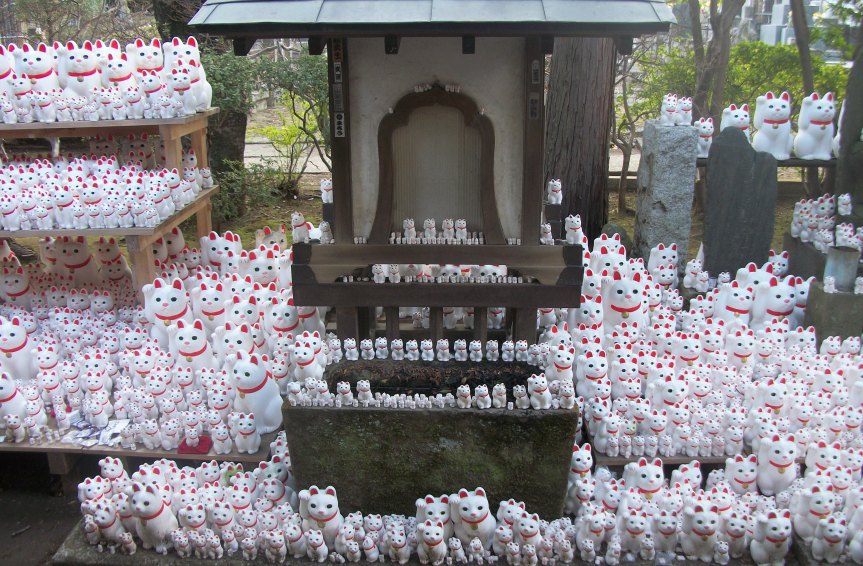
Gotokuji Temple is an unassuming temple in the suburbs of Tokyo. It is the home of the “maneki neko” or “beckoning cat” that you’ll find welcoming you into almost every Asian restaurant or home. Having been to countless temples while in China, I’m very temple’d out… but I knew I had to visit this quirky little spot. Walking from the station to this temple will take you through a residential neighborhood that is so quiet you’ll wonder if you’re still in Tokyo. The temple grounds itself was just as peaceful, even though I visited on the weekend.111_8762
YOKOHAMA

Yokohama is where I’ve been staying the past month, 25 minutes via express train from Shibuya. I really like Yokohama. You can say I’ve gotten too comfortable here, hence why I decided to extend my visit. Yokohama is the capital of Kanagawa Prefecture, and there are just as many things to keep you busy in Yokohama as there are in Tokyo.

My favorite area of Yokohama is along the harborfront. It’s so refreshing to see the sea and so much sky especially after being in the city amidst skyscrapers. I might be a little biased, but Yamashita Park was my favorite park that I visited during my time in Kanagawa (Yamashita being my great-grandfather’s surname). I’ve gone a few times, and each time, I never want to leave.

Strolling from one end of the park to the other is so wonderful. It’s a great place to people-watch, enjoy a bento, and admire sakura and boats cruising past the harbor. I also love Yamashita Park because on one end, you’re really near to Chinatown, which made me miss Tianjin a lot. Chinatown Yokohama has many pedestrianized streets lined with shops and restaurants to wander about, and they sell everything from mooncakes to baozi ( just not my favorite Tianjin street food, jian-bing).

And towards the other end of the park, you have Yokohama Red Brick Warehouse, near Minato Mirai station. If you’ve been to the Chelsea Market in New York, that’s what the Red Brick Warehouse reminded me of. It used to be customs houses, so the architecture reflects that and the complex was built in an industrial manner. And of course, it’s named “Red Brick” accordingly so, with it’s exposed and very vibrant red brick. There is restaurant called Bills at the warehouse that is known for its pancakes (in Japan of all places, who would have thought!) and they did not disappoint.

Keep walking, and you’ll hit Minato Mirai 21 (or MM). It’s a modern urban area similar to Roppongi Hills, but a lot bigger. It’s also home to what is arguably the symbol of Yokohama — the Cosmo Clock 21 Ferris Wheel. What I love about Yokohama is that this area has a really nice skyline, especially at night, and with the ferris wheel. But despite the tall buildings, there’s still a lot more skyspace and breathing room than in Tokyo, and it’s a bonus to be right by the sea as well.

I think this might be my longest post yet. Cutting down video footage for Nagoya, Tokyo, and Yokohama was really hard as well! There’s a lot I wanted to share, but I promise I won’t make you sit through a half hour of my adventures in one go (at least not this time C;) I leave this weekend to run my JR pass to the ground for the next 21 days, so this will be my last post for a little bit. Instagram is a lot easier to manage when you’re on the go, so I’ll keep up with that. Where to next? Kyoto and Nara.

Can’t wait to get on the road (or in this case, bullet train) again. See ya next month, friends!

Love from Japan ♥
Las Filipinas

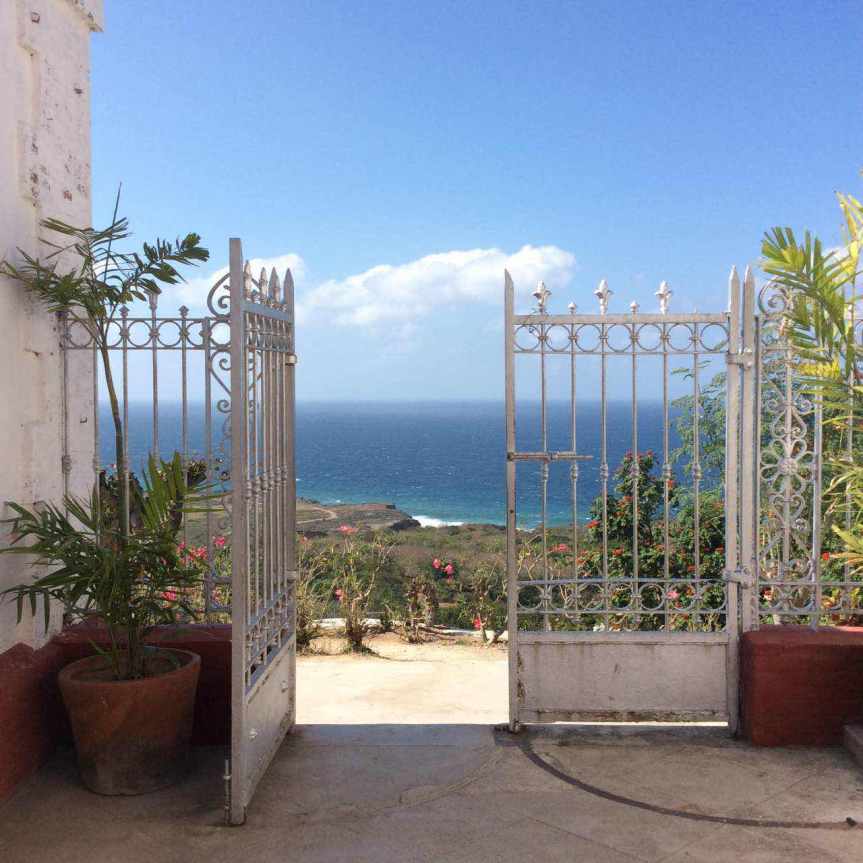
Las Filipinas… it’s been long overdue that I visit my native land, where both my parents were born and immigrated from with my grandparents when they were kids. While a visit would have only been made better if my parents and sisters were there, and while it was unfortunate that I was meeting my father’s side of the family for the first time under the circumstances of my great-grandmother’s passing, it felt really amazing to be in the land of my people.

Visiting the Philippines felt a lot like visiting Toronto in the sense that I was going there to see and spend with family, (most of whom I was meeting for the first time!!!) who were the most generous hosts and hospitable guides. It was nice to be surrounded by family being away from mine since August, and to have family act as my travel guide as well as be the best kind of traveling company.

Without my relatives, I don’t know how I would have gotten anywhere. Traffic, especially in Manila can be particularly awful, but I had the best time riding public transportation in the form of “jeepneys,” (small, colorfully ornamented public buses) and in the sidecar of motorcycles.I spent the majority of my time with my great-aunt Flory who lives in Manila and together with my aunts, we also visited the northern province of Luzon (Ilocos Sur & Norte), and Tagaytay in Cavite. I also traveled further south to Oriental Mindoro, where my great-grandmother lived.

There were a lot of firsts for me in the Philippines: I met a LOT of cousins, and great-aunts and uncles for the first time, rode a horse, sang karaoke outdoors, ate a lot of homecooked Filipino meals for the first time in months (!!!), fed a camel, saw a windmill up close, went swimming in a waterfall, and watched a dancing fountain show coordinated to “Watch Me-Whip/Nae Nae” (among other songs).

If I could describe the Philippines in one word, it’d be “warm.” The Philippines has a very lush, tropical climate year-round, so it is very literally a warm place. There are a lot of farms, rice fields, beaches, and waterfalls. Manila is a big city, but visiting smaller towns, and rural provinces was refreshing after the hustle and bustle of China, and Hong Kong.

The people of the Philippines were so warm and welcoming as well. My family showed me the warmest hospitality and made sure I enjoyed my visit. My trip there was such a treat. I’m always grateful, so grateful, and I feel so proud of my roots. Maraming salamat po, las Filipinas!!! Until next time.

I’ve been in Japan for a few weeks now, friends. I hope to update you sooner than later about my time in Tokyo before I jet-off and run my JR pass to the ground starting this weekend… but if I can’t, sit tight. I will share about my time here, promise.

A happy week to you all, and happy watching my Philippines footage!

Love from Japan ♥

Hong Kong Highlights

Having been in China for almost six months, traveling to any country would have been a breath of fresh air. Literally. My first post-China country to visit happened to be Hong Kong. Hong Kong is incredibly diverse, dynamic, and Westernized. You know you’ve been in China too long when you get really giddy about the fact that people stay on one side of the escalator.  After tackling China, Hong Kong was a breeze to visit. I didn’t need to ask for directions once in my four days of visiting, my hostel gave me a map that was incredibly helpful, and Hong Kong’s subway system has nothing on Beijing’s! There are also signs everywhere, and in English. If New York and London had a child they raised in Asia, they would name it Hong Kong.

The only negative I’d heard about Hong Kong was that it was an expensive place to visit, and it can be. Gone are the incredibly cheap street food eats and small, family owned restaurants of China. As Westernized as Hong Kong is, expect Western prices as far as meals in restaurants go (likewise, expect to feel overwhelmed by how many dining options you’ll have).

Being on a budget, it really works that I’ve always been the kind of traveler to snack throughout the day, and I feel like meals aside, every foreign place you go to has snacks they are famous for and that you should indulge in. While not always the most healthy option, local snacks can be just as filling, and also save time when you have a lot to see. Hong Kong was not an exception in that respect. I indulged in quite a few pineapple buns, and egg waffles.

I was also really lucky that my hostel was near an IKEA, and I’ve always loved IKEA food. Hong Kong’s IKEA had some really delicious vegetarian options with China prices. But otherwise, I did treat myself to an amazing lunch my last day there. One of their most famous and popular restaurant chains is called Tsui Wah Restaurant, and I indulged at their Locklear Street location. I ordered enough for two people. I ate it all. It took me almost two hours to indulge, but I wish I had room to order more. It was very yummy.

As far as transportation goes, I didn’t have to take a taxi once (quite steep with meters starting at $17HKD) and relied on public transportation. If you’re there for more than a couple days, I would recommend getting an Octopus card. Used throughout Hong Kong, it’s a debit-metro card in one. It can be used on any form of public transportation, and in most restaurants, and convenience stores. You save a bit when you use your Octopus card on transport, rather than paying in cash, and it also saves time. To start, you need to top it off with $150HKD (that includes a $50 deposit) and any unspent value when you return your card, (minus a $9 service fee if you return it in less than three months), you will get refunded. So for me, going all around Hong Kong, Kowloon, and up to Victoria Peak made it worth it.

For the majority of Hong Kong Island, forgo the subway and take the “ding ding” tram. I enjoyed riding these trams so ridiculously much. Not only is it more cost-effective than taking the subway, but snag a seat on the upper deck and it comes with a complimentary scenic tour of the island. It’s such a great way to take in the sights and sounds of the city, as well as people-watch the locals, who seemed to favor this method of transportation as much as I did. I cannot praise these trams more, nor can I tell you how many times I rode them (maybe somewhere upwards of 20 times??!). If you’ve got time to get to Kowloon or back, take the Star Ferry for a fraction of the price as well. It’s less than an eight minute ride, and I give the views eight stars. Again, much more of a worthwhile experience than taking the subway.

There are a lot of free sites to check out (museums have free admission on Wednesdays!) and I thoroughly enjoyed strolling the Flower Market, the Goldfish Market, and the Bird Garden (which also has free Wifi). There are lots of markets in Hong Kong (some more questionably set-up than others, if ya know what I mean), and if you’re on the island, hop on the tram and hop off when you see loads of people on the sidewalk hawking their wares. Hong Kong is a good place to test out your bargaining skills as well!

And aside from transportation to and from the Peak (much more cost-effective to take a bus rather than taxi or the peak tram), Victoria Peak can be visited for free. Sure, you can pay to go up to the highest point of the Peak, but on the terrace of the Peak Galleria, enjoy spectacular views free of charge.

Overall, Hong Kong was a dream. Just check out these pictures of Victoria Peak ^^^. I mean, I’ve read a few things online that said that Victoria Peak was the #1 must-see in H.K. and I absolutely agree. The views left me speechless. I wish I could have stayed a bit longer, H.K, but at least I have the memories, photos and some footage below to remember you until next time.

I left Hong Kong to spend the next three weeks in the Philippines, where my parents were born, but I had never visited. Can’t wait to share about the first time seeing my roots. More later, friends.

Love from Japan ♥

So Into Indie

12212461_10153266902487547_51411776_n

Down an unassuming alleyway off of a side street in Tianjin’s Nankai district, resides a true gem. This gem goes by the name of Indie Bar, a favorite spot among expats and university students alike. Last month, I  posted about my top three Tianjin to-dos… this place deserves the #1 spot. It’s #1, and that’s why it has the honor of an entire blog post.

Indie Bar is run by Jesse and Rain, the warmest couple you’ll ever meet. Jesse is a Canadian transplant, and Rain is a Tianjin local. Indie serves from a full bar (the only place in China I’ve found that can serve a proper whiskey ginger), and whips up some Western favorites, from pizza to pancakes, all at reasonable fares.

My first visit, I went to Indie with a co-worker. My co-worker had been there before, and we still got lost along the way… consider the journey to find this  place as your “initiation” into Indie Bar, as everyone gets lost trying to find this place for the first, second… sometimes even third time. It doesn’t help that there’s no sign on the outside that you can see from the street. Upon entering my first visit, all of the patrons were in the middle of some cowboy-wild west card game. Nobody was off to the side by themselves, awkwardly lingering. And two seconds after we got drinks, we were asked to pull up chairs and join in on the game. It was nice to feel so welcome, and unlike the “newbie” that I was in Tianjin.

Indie has such a relaxed atmosphere. It’s nice to go there and recognize familiar faces and unwind after an especially busy day of teaching. I frequent the bar on Mondays for movie night, and Wednesdays for trivia, but any day of the week (except for Thursdays, as they’re closed) you’ll find something going on: live music, a bar-wide game of charades, or you can take your pick from their mini library and curl up with a book or relive childhood and challenge your friends to a good ole game of Monopoly. They had a killer Halloween party, and friends I made through Indie hosted wonderful Thanksgiving parties.

Indie Bar just celebrated its two year anniversary in September, and I foresee it celebrating many more to come (although possibly in another location). It’s more than just a bar. It’s a community. Before I started going here, I felt like a stranger in Tianjin. But through Indie, I’ve met some really terrific people who are expats like myself, going through the same bouts of missing home, struggling with the language barrier, and trying to find themselves in this great, big, and scary world.

The struggle to find this bar is worth it. Easier said than done when you look at getting lost as part of the adventure. I didn’t expect to find a place so welcoming, and so wonderful in Tianjin. But places like this do exist thousands of miles from home. Don’t be afraid to get out and discover them. I’m so into Indie (as is anyone and everyone who stops by this bar), and I promise you would be too.

It’s wild to think that I only have a little over a month left of teaching before I spend the next couple of months traveling a bit through different areas of China, other parts of Asia and Europe… but more on those plans later. I just feel like six months in China is nothing. To some people, yes. I can understand that six months can feel like six years. But not to me. There’s a part of me that wishes I had only just arrived. I guess time really does fly when you’re having fun.

Happy late Thanksgiving, y’all! Hope you ate lots and lots. Cheers.

Love from Tianjin ♥

Things I’ve Done… Things I Will Do

I think it’s important to reflect on your achievements, however glorious or frivolous they might have been. They might not be the biggest nor most important accomplishments, but when you think about the people you may have shared some of those moments with, what doors those events opened up, and what obstacles you’ve overcome, everyone has something they should be proud of. You are where you are today because you’ve done something, because you’ve had the support of people who care about you, and you’re a human being with goals and their own battles to fight, just like everyone else.

I was the 2nd place winner of the 2006 Imagine Schools State Science Fair. I’m a blood donor. I once out-ate all of my cousins at Cici’s Pizza when I was like, 12. I’ve held a job since I was 16, supporting myself through college. I’ve been a pescatarian since I was 18. I recycle. I make magic happen on the daily for guests at work. I am a college graduate. I was the Maid of Honor in my best friend’s wedding. I planned and saved for a trip abroad to Europe for the longest time and actually made it happen as a post-graduation present to myself last summer… 

I’ve got things I have yet to do, goals I’m determined to make. When it comes down to it, aside from my accomplishments, I’m most proud of how good I feel about some big, somewhat nerve-wracking things to come.

Julia Child

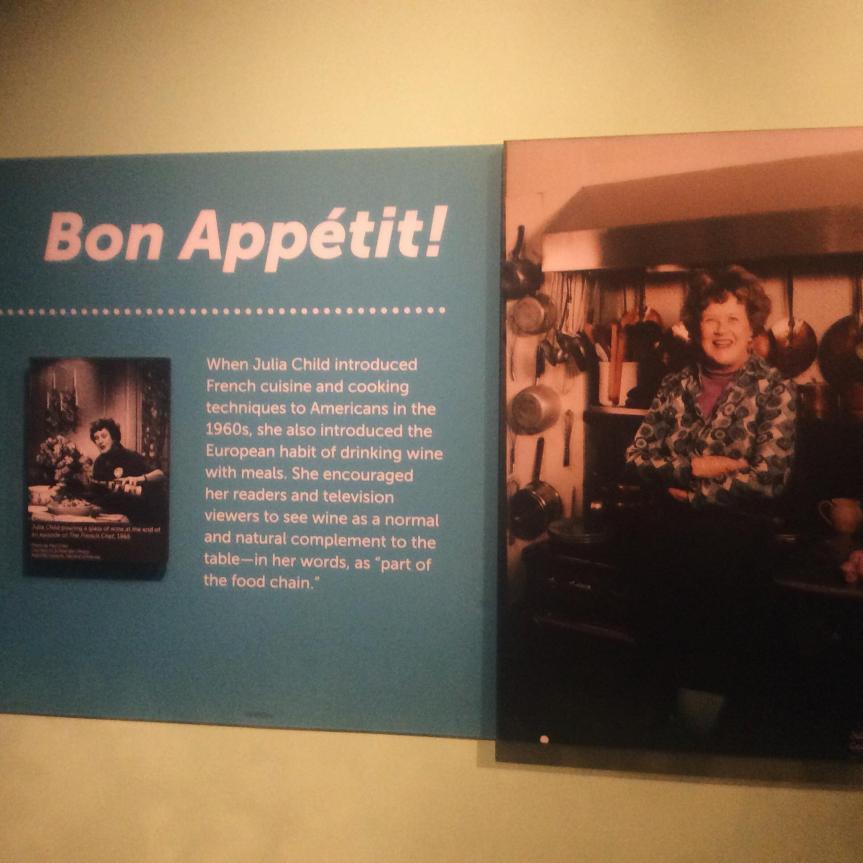
Julia Child, great American chef. She took French cuisine and made it accessible for everyday Americans through her timeless cookbooks and television show (a copy of which I bet your mother or your grandmother probably owns).

Miss Julia Child. She didn’t start cooking until she was 37.

So. If I go completely broke visiting every continent before I’m 30, that could actually be considered somewhat of an accomplishment, no? C: