
I woke-up late to my first day of orientation in China a month ago (Florida-time). It’s crazy to think that I’m midway through my third week of teaching! These past few weeks have been really busy getting settled into my new teaching center, meeting a ton of new students, remembering and forgetting a ton of new names, and creating a ton of new lesson plans. New, new, new… I came to China to teach, an extraordinarily new direction for me to go in, both professionally, and literally in terms of geography, but I’ve become quite fond of the thrill that comes with being in a foreign place.
A word on my teaching center: I have been referring to it as a “teaching center” as I don’t work at a traditional school. Rather, I work at tutoring facility, similar to Kumon in North America. It’s called MaxEn International, and they have centers all over China (we use workbooks and programs designed by McGraw-Hill, if that educational publisher rings a bell for anyone back home). Classes are either two or three hour sessions, and children attend these classes after-school or on weekends to learn and practice their English.
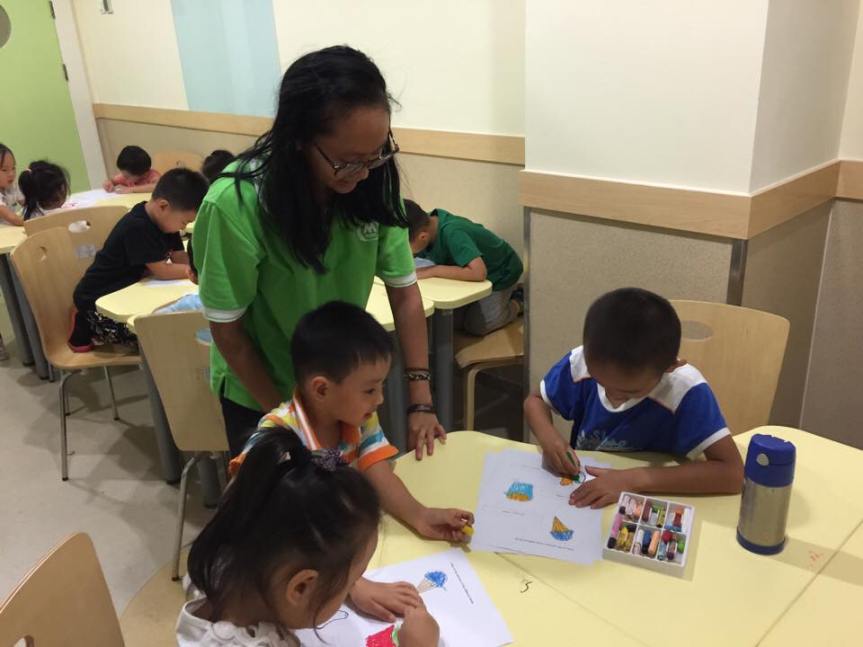
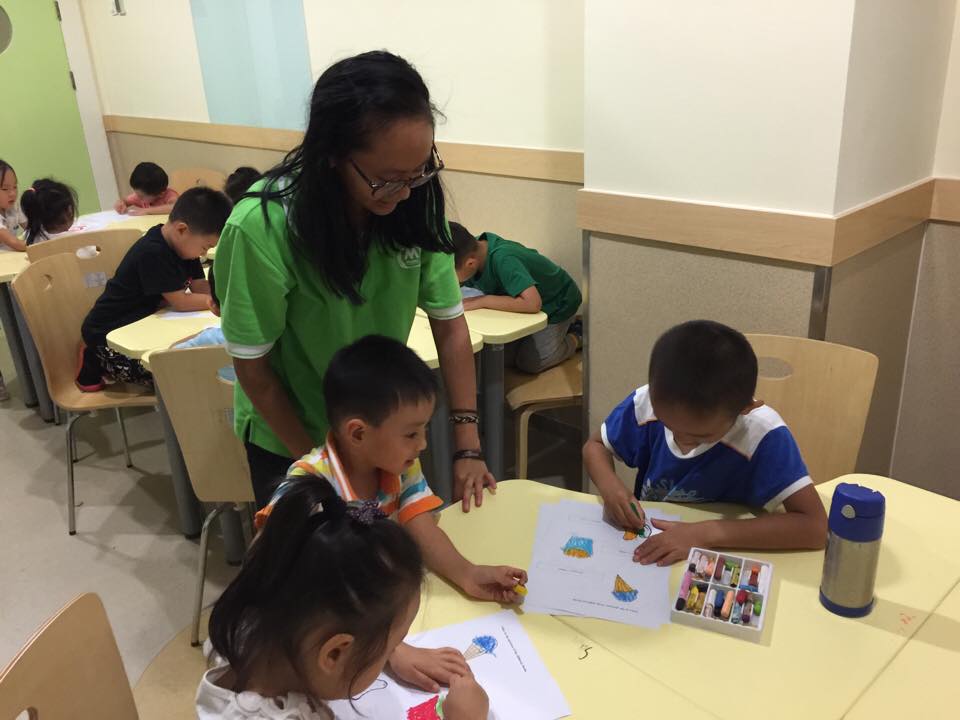
So while I do work evenings and weekends, the classes are very small, thus manageable (I have never had more than twelve students to a class), and rather than teaching one grade level, after these three weeks I will have covered the spectrum from pre-school to high school aged students (3-14 years old), which I think is terrific experience. Also, if you can’t tell from the photos below, we have a uniform of sorts, so that you can easily spot us teachers in a sea of students. As unflattering as this shade of green is, I’m actually really grateful for this uniform. It saves me a lot of time in the mornings. Also, more importantly, the mascot for MaxEn is a lion: go saints!!!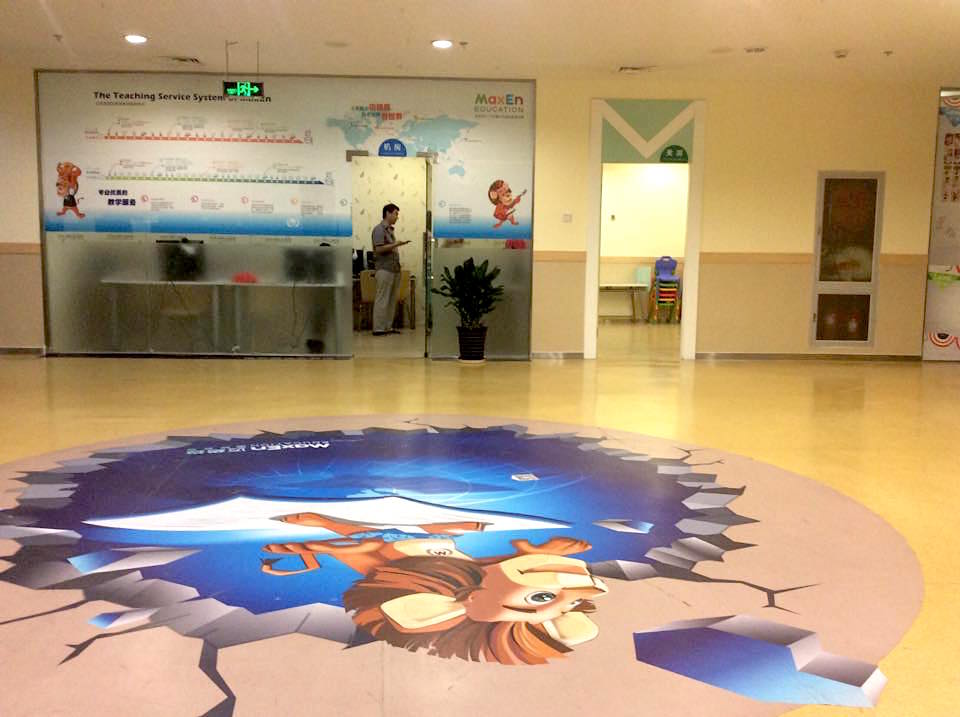
I’m learning that while I thought I would enjoy teaching a younger group of kids more (2nd grade and below), it’s certainly a lot more difficult than teaching the older kids, who already have a foundation of the English language. The little ones are so adorable, but they just require a lot more attention (and not to mention bathroom breaks). Even trying to explain certain vocabulary words, like “teamwork” and “salty,” in terms they can understand have stumped me a couple of times.
I am pretty exhausted leaving my younger level classes. Since the littlest munchkins have the shortest attention span, I try to keep the students as active as possible with role-play and games. My go-to games are “hot potato” and bingo, depending on the age group. Kids love games, and if you can turn vocabulary review into a game, you’re golden. A typical school day in Tianjin begins at 7AM and ends at 5PM. To follow these hours with another class at 6PM makes for an incredibly long day. Really, it’s just essential to me that the kids have fun while learning.
Lesson planning itself is a lot more basic and simple than I make it out to be sometimes too. I overthink everything, lessons included. The center itself is well equipped with any resources I may need though, aside from the occasional piece of realia, such as fresh fruit. But we have workbooks for each level with vocabulary and phrases depending on the topic of the lesson that I am expected to teach. My lessons are comprised of either Powerpoints or PDFs with some visuals for the vocabulary (which includes photos, videos, realia, etc), worksheets, flashcards, and games, of course. Each lesson comes with an online version complete with a couple of games that we also have access to, so there are plenty of ways to drill the vocabulary and help the kids learn. 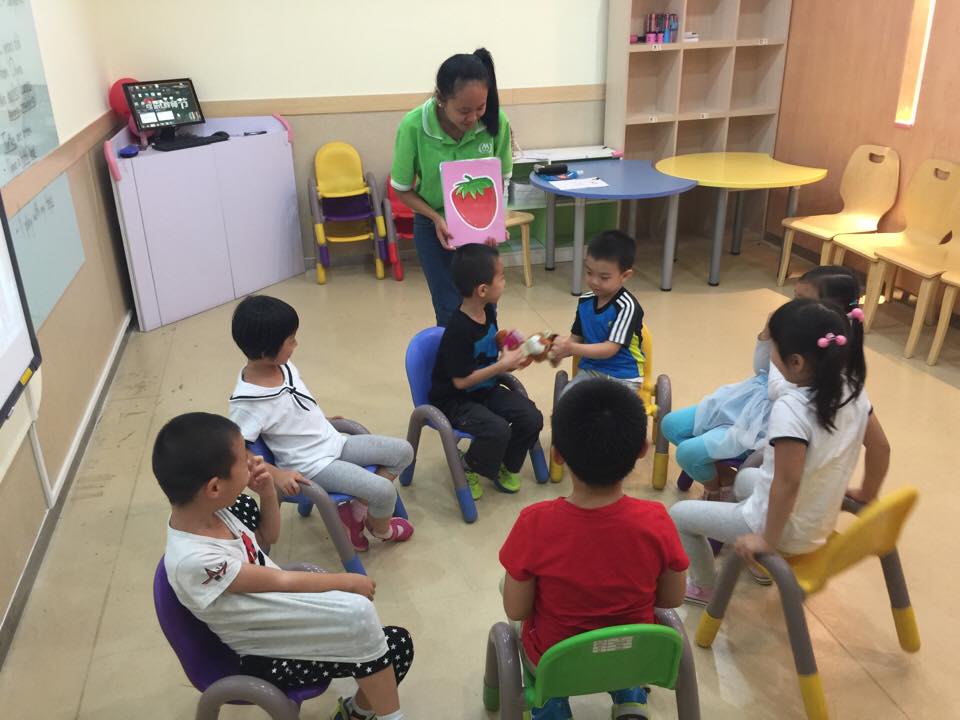
Since I’ve started teaching, I’ve dealt with students who are disruptive to the class, students who are unwilling to participate, or who are only speaking Chinese, and students who won’t speak at all. Yes, these situations can, and have been frustrating, but slowly and surely I’m learning the best ways to handle these different scenarios. When it comes down to it, they’re just kids though, y’know? One of the toughest parts is going into a new class and not knowing what level of English the children already know. Did I make my lesson too hard? Too easy? Both have happened a couple times because every class is different. Even students at the same level have different strengths and weaknesses in their English. I’m learning that flexibility is key as a foreign language teacher.
It can be a little disheartening feeling like you haven’t taught students anything in a class, and sometimes I feel that way with the youngest kids. But, I know that with the youngest group of students, the kids are just really small. They’re still learning social skills, fine tuning their motor skills, and it’s hard for them to grasp so much new vocabulary, especially in a second language.
I do always finish class with an older group of kids feeling much more accomplished, and it just feels very rewarding, knowing that my kids are leaving having learned something new. I’m so honored to have this opportunity to be a mentor to these students. They’ve given me something to look forward to each day, and I feel like I have a real sense of purpose here, no matter how much of a class is spent coloring more than anything. I may be the teacher, but I have undoubtedly, and still am, learning just as much as my students. China is one big classroom in itself for me, where around every corner there’s something unfamiliar and refreshing to see, a different dish to try, a new phrase to learn… and for this experience, I just feel really grateful.
Love from Tianjin ♥




 JACKIEXPLORES