
Farewell, Tianjin: What I’ve Learned, What I’ll Miss, and More.

The time has come for me to leave my teaching internship. I can easily remember my first night when I landed in Beijing… and the next morning when I woke up late to orientation due to jet lag. That could have been five mornings ago, and not five months ago. Since I’ve landed in China last August, I’ve picked up on a few things. These include but are not limited to: how to play dice, command a classroom, command a taxi driver in Mandarin, pick a lock, and to be more appreciative of things I took for granted before moving to China.

  1. How to play dice. This is a game I learned to play in Foshan, a town a few hours from Hong Kong, over Golden Week. I reunited with pals from the internship who were placed there. There are lots of variations of dice games in China. It’s a very popular pastime. It’s played everywhere, so be prepared to learn as well! The dice game I was taught involved a lot of fibbing, but all in good fun.
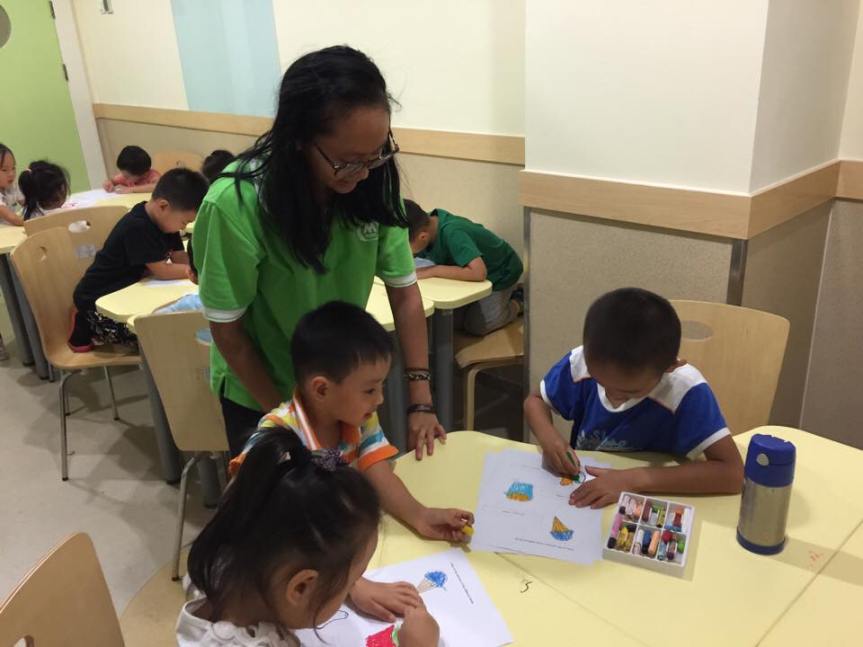
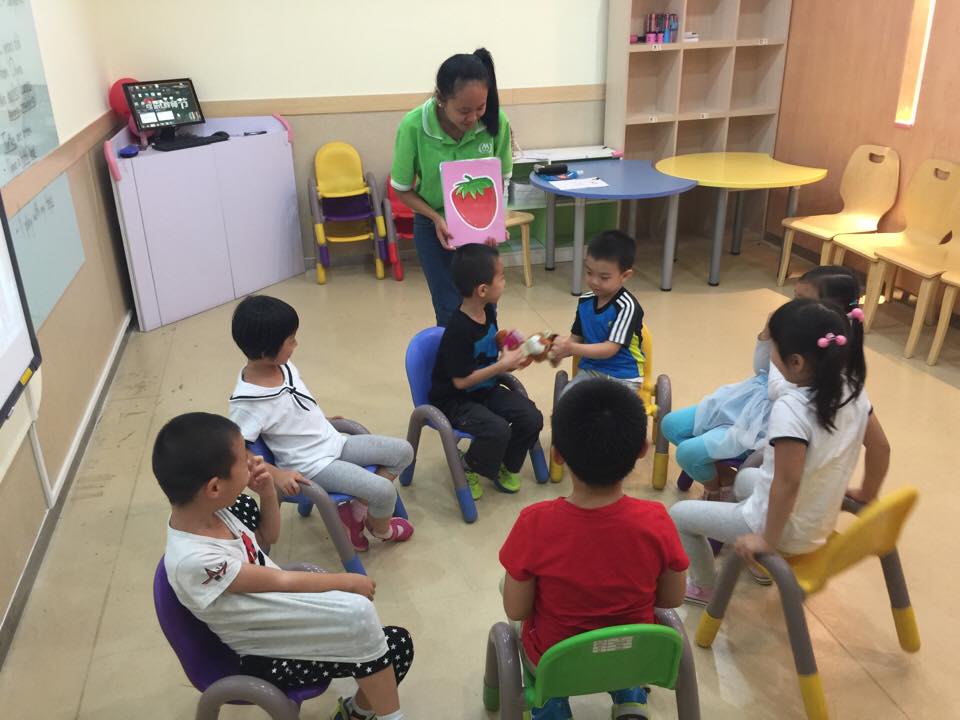
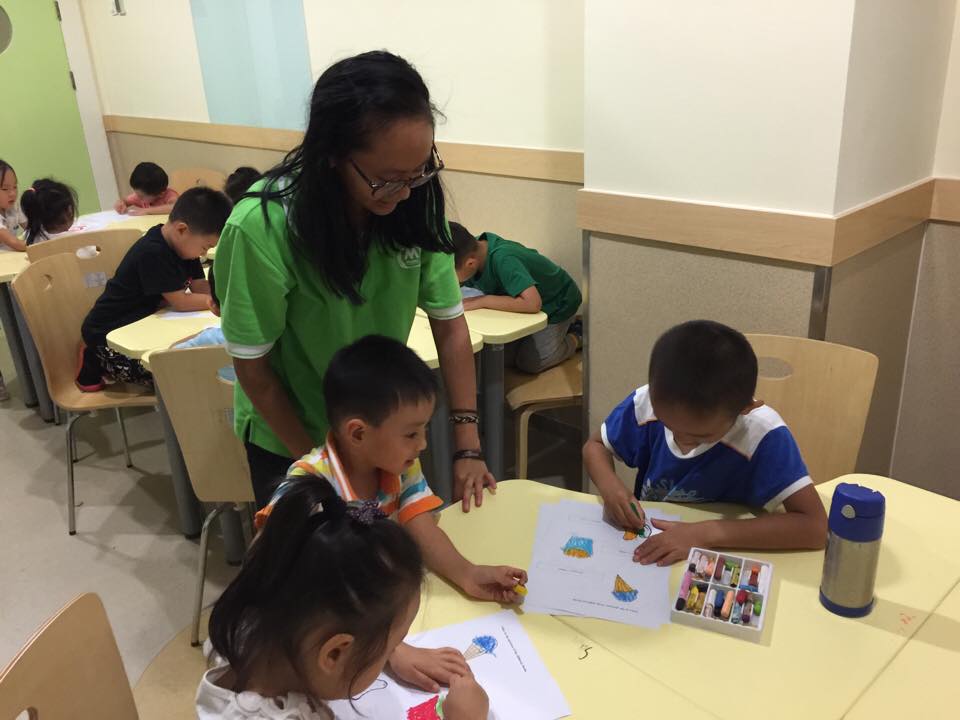
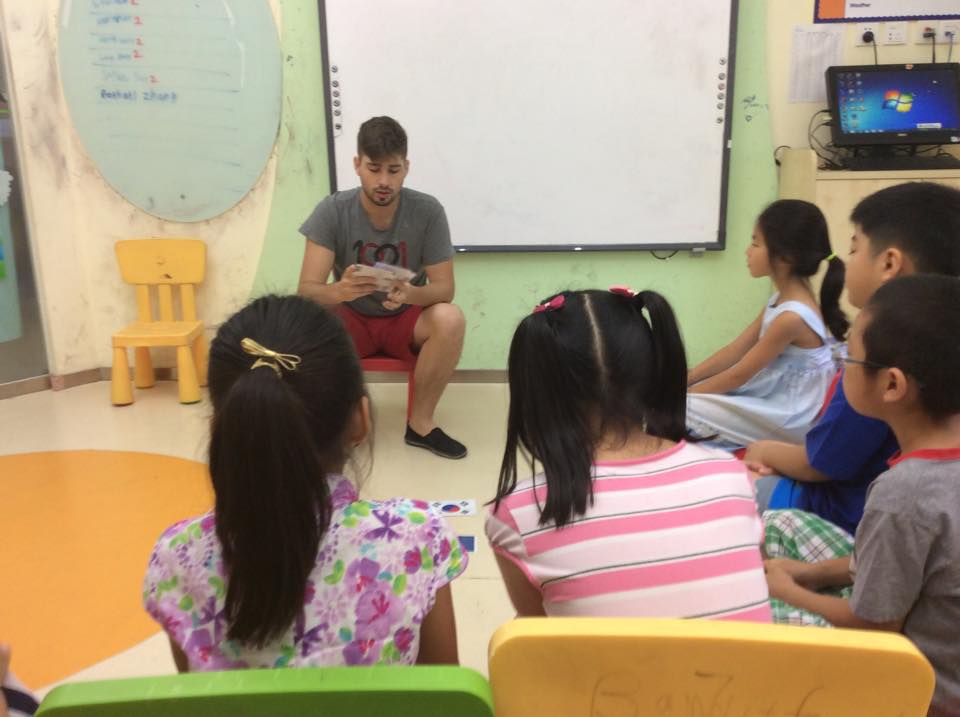
  2. Command a classroom. The main reason I came to China was to gain teaching experience. I’m very grateful for my co-workers, and how helpful and supportive they’ve been from the beginning. Holding the attention of children for a few hours after school and on the weekends can be exhausting. Keeping a mental note of games to play, songs to sing, and having coloring sheets on hand are true lifesavers. I remember being so nervous to teach my first couple of weeks. Public-speaking has never been my forté. But from this experience, I’ve become fairly comfortable presenting in front of group of people… well, a group of children at least. C:

  3. Pick a lock. #wheninchina… that’s all I’m going to say on this one.
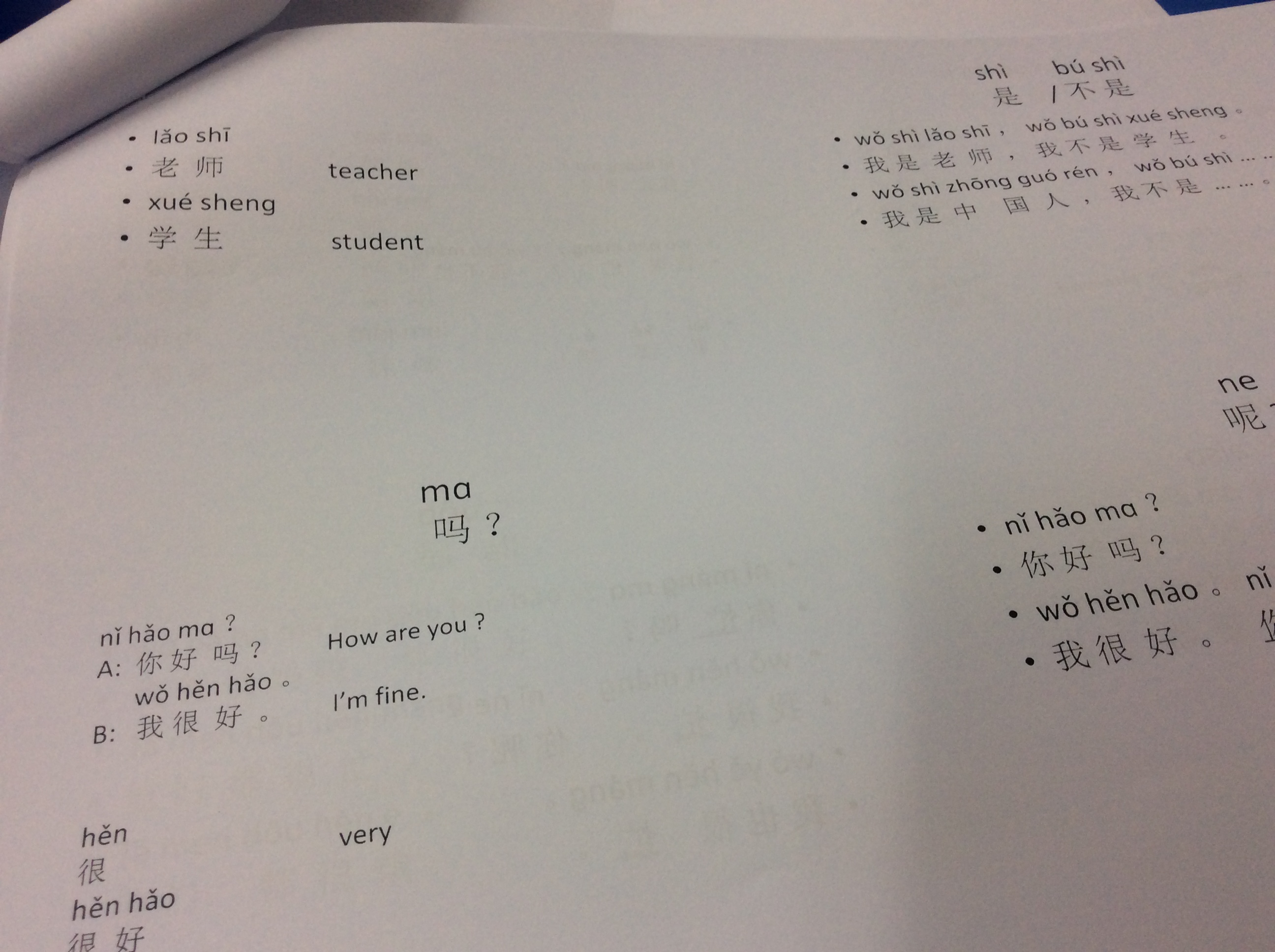
  4. Command a cab in Mandarin. Mandarin is the hardest language I’ve ever tried to learn. Not picking up more than I’ve learned is my own fault, for not taking the initiative to teach myself more, and feeling really self-conscious when it came to mingling with the locals (especially when they assume I’m a local as well, and they speak very quickly). But, I am very proud of the fact that if I know where I’m going, I can give directions to a taxi driver.
  5. Be more appreciative of the little things… I’m speaking toilet paper, common courtesy when it comes to lining up, and being able to pass complete strangers with a “hello, good morning!” without getting a strange look. These are things I took for granted when I was home. There is certainly a “China level” of organized chaos I probably won’t experience anywhere else. While I’ve been cut in line more often than I can count, I also no longer question how ruthlessly my taxi driver cuts off other drivers/motorcyclists. When it comes to toilet paper, that is one thing to never be without. I will never take toilet paper for granted again. Or Western styled toilets. Or drinkable tap water. Lastly, I miss and love how easy it is to make small talk in America. Be it that my Mandarin is really basic, or that passerby’s here aren’t always the most approachable people, but a “good morning!” and a smile goes a long way.

As far as the little things go in China, China certainly has it’s own missable charms. It’s here where I’ve slowly built up my tolerance to sesame seeds, spicy food, and the taste of beer. I’ve gained so much experience in Tianjin: as a teacher, student, cat lady (I spent way too much time at this cat café not too far from my work), solo traveler, amateur blogger…

Five months may feel like five years to some, but it’s been a blur to me. Who will I miss the most? My kids. My students have had an immeasurable impact on me, just considering how much time I’ve spent with them over the past few months. I’ll miss the friends I’ve made: both locals (my coworkers) and expats alike (aka Indie Bar).

I know that I will crave jian-bing, my favorite street food and a Tianjin staple. I will miss living where I can walk everywhere, but also have the convenience of the subway and cheap cab-rides at hand. China is a place where a trip to the supermarket was always an adventure, and it was in Tianjin where I learned to be flexible with my grocery list. Not everything was packaged familiarly, things came in odd flavors, and sometimes I had no choice but to purchase “mystery” snacks… #wheninchina.

As I spend the next three weeks traveling further South around China, I will miss that I was able to plant some roots here for a little bit, even if it did mean living in one of the most heavily polluted cities, and having to fight my way through the subway Saturday mornings for work. But, I am looking forward to refreshing scenery, fresher air, meeting whoever I may cross paths with, eating loads more delicacies and making the most of the rest of my time in China.

Next stop: Shanghai!

Tianjin Transport (30/3)

I filmed some clips of my commute to work my second or third week in Tianjin. It’s just taken some effort for me to sit down and tell myself to put those clips together to make an actual video. So, don’t be fooled by the fact that nobody is in winter gear in my video. It’s turned into the Arctic Tundra overnight in China. Just a few days ago, it snowed in Beijing! But anyways, I digress.

I thought it would be neat to share a bit of my daily routine here in China. It’s very exciting for me, as this is the first time I’ve ever had to take the metro to a job before. When I got a metro card just like the locals, it was a big moment (this video was filmed before I had the Tianjin staple of a metro card, and instead was purchasing a token for each ride).

If you’re traveling anywhere with a subway/metro system: use it. Metros exist for a plethora of reasons, the best of which is that it saves money. In Tianjin, you save 20% of your fare when you pay with your metro card as opposed to buying one-way tokens.  Getting a card does involve a 20¥ fee, but that works like a deposit, so I’ll get that back before I leave. Other perks of the metro are that it’s better for the environment, works as shelter against the elements, and is an ideal place to people watch.

As with any public transportation in a metropolitan city, expect craziness during peak times, such as morning rush hour and around dinnertime (7AM-9AM and 5PM-7PM). Having experienced rush hours in both New York and Beijing, rush hour in Tianjin, by comparison, is a breeze. For that I am really grateful! It’s taken a bit of getting used to the fact that the concept of “personal space” doesn’t quite exist in China. This is very evident should you take any public transportation around here, and even while you’re waiting in line for food… let’s just say that lines don’t exist at all. Be prepared to be cut in line almost everywhere! But the most inconvenient aspect of the metro is that it only runs until about 10:30PM, so I’ve had no other option but to take a taxi home if I miss the last subway. However, compared to the cost of cab rides in America, taxis here are incredibly inexpensive, and therefore reasonable means of transport (less than $2 if I’m running really behind and need to cab it to work).

Riding in taxis in China is always an experience. I still remember my first taxi experience in Beijing. It was terrifying. One of the first observations I made in China was that pedestrians do not have the right of way. I repeat: pedestrians do not have the right of way. I mean, cars will stop for pedestrians, but it’s almost as if it happens as a second thought for drivers. Drivers here drive very fast (in addition to an English newspaper, I have yet to see a single speed limit sign), and tend to stop at the very last second should they need to. Upon my first few weeks of arriving here, I had a couple of close calls as a pedestrian, and  remember seeing my life flash before my eyes a few times as a passenger!

After my fair share of cab rides since I’ve been here, I’m no longer a basket of nerves through a ride. In actuality, I find them to be quite comfortable these days with the winter weather and all. And taxi drivers are some of the coolest people ever. They are the locals with whom I’ve practiced my Mandarin the most, and mostly to give directions, but I think it still counts. I remember one time I managed to communicate to my taxi driver that I liked the song playing on the radio, and he proceeded to blast the stereo for the rest of my ride. So sweet.

My commute to work takes about a half hour. I walk ten minutes to the subway from my apartment, ride for three stops for about 15 minutes, followed by a five minute walk to my teaching center. From my apartment to the subway station, I’m going in the opposite direction of traffic, so you’ll notice in the video that plenty of bicycles, mopeds and motorcycles pass me on my right side. Given the traffic congestion in China, I think it’s wonderful that they have an entirely separate lane for smaller means of transportation on main roads. Did I tell you about that one time I rode on the back of my co-workers moped? When in China, right?!

I apologize in advance that the quality isn’t the greatest, but I hope you enjoy this little video of mine nonetheless.

Love from Tianjin ♥

Three weeks into teaching… go saints! (And bingo!)

I woke-up late to my first day of orientation in China a month ago (Florida-time). It’s crazy to think that I’m midway through my third week of teaching! These past few weeks have been really busy getting settled into my new teaching center, meeting a ton of new students, remembering and forgetting a ton of new names, and creating a ton of new lesson plans. New, new, new… I came to China to teach, an extraordinarily new direction for me to go in, both professionally, and literally in terms of geography, but I’ve become quite fond of the thrill that comes with being in a foreign place.

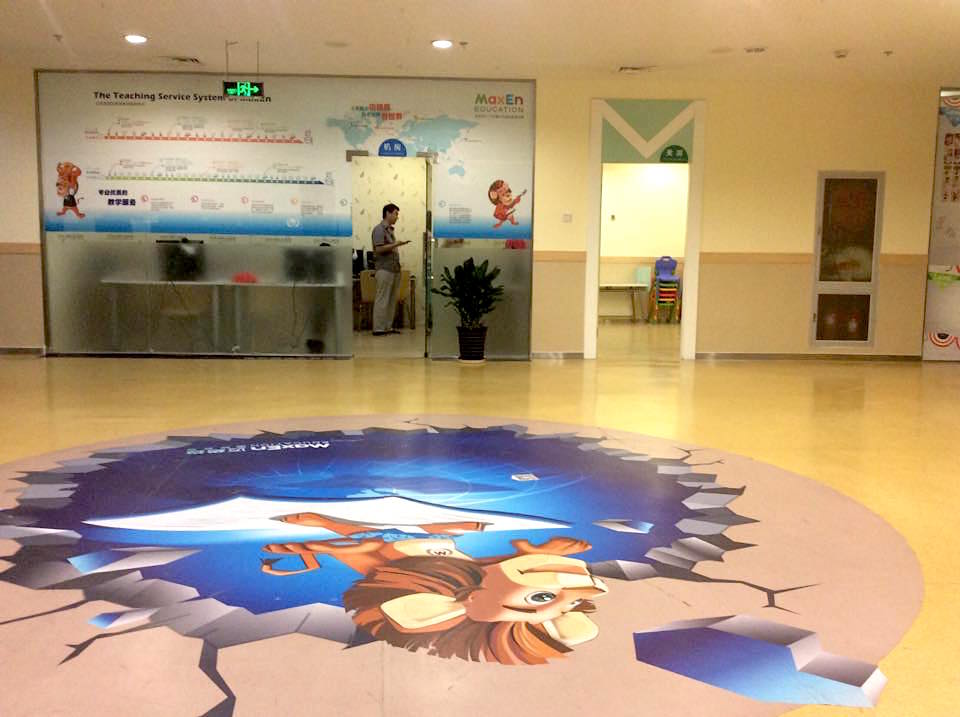
A word on my teaching center: I have been referring to it as a “teaching center” as I don’t work at a traditional school. Rather, I work at tutoring facility, similar to Kumon in North America. It’s called MaxEn International, and they have centers all over China (we use workbooks and programs designed by McGraw-Hill, if that educational publisher rings a bell for anyone back home). Classes are either two or three hour sessions, and children attend these classes after-school or on weekends to learn and practice their English.

So while I do work evenings and weekends, the classes are very small, thus manageable (I have never had more than twelve students to a class), and rather than teaching one grade level, after these three weeks I will have covered the spectrum from pre-school to high school aged students (3-14 years old), which I think is terrific experience. Also, if you can’t tell from the photos below, we have a uniform of sorts, so that you can easily spot us teachers in a sea of students. As unflattering as this shade of green is, I’m actually really grateful for this uniform. It saves me a lot of time in the mornings. Also, more importantly, the mascot for MaxEn is a lion: go saints!!!12048564_10153188177652547_211130893_n

I’m learning that while I thought I would enjoy teaching a younger group of kids more (2nd grade and below), it’s certainly a lot more difficult than teaching the older kids, who already have a foundation of the English language. The little ones are so adorable, but they just require a lot more attention (and not to mention bathroom breaks). Even trying to explain certain vocabulary words, like “teamwork” and “salty,” in terms they can understand have stumped me a couple of times.

I am pretty exhausted leaving my younger level classes. Since the littlest munchkins have the shortest attention span, I try to keep the students as active as possible with role-play and games. My go-to games are “hot potato” and bingo, depending on the age group. Kids love games, and if you can turn vocabulary review into a game, you’re golden. A typical school day in Tianjin begins at 7AM and ends at 5PM. To follow these hours with another class at 6PM makes for an incredibly long day. Really, it’s just essential to me that the kids have fun while learning.

Lesson planning itself is a lot more basic and simple than I make it out to be sometimes too. I overthink everything, lessons included. The center itself is well equipped with any resources I may need though, aside from the occasional piece of realia, such as fresh fruit. But we have workbooks for each level with vocabulary and phrases depending on the topic of the lesson that I am expected to teach. My lessons are comprised of either Powerpoints or PDFs with some visuals for the vocabulary (which includes photos, videos, realia, etc), worksheets, flashcards, and games, of course. Each lesson comes with an online version complete with a couple of games that we also have access to, so there are plenty of ways to drill the vocabulary and help the kids learn. 12032391_10153187345877547_1077465496_n

Since I’ve started teaching, I’ve dealt with students who are disruptive to the class, students who are unwilling to participate, or who are only speaking Chinese, and students who won’t speak at all. Yes, these situations can, and have been frustrating, but slowly and surely I’m learning the best ways to handle these different scenarios. When it comes down to it, they’re just kids though, y’know? One of the toughest parts is going into a new class and not knowing what level of English the children already know. Did I make my lesson too hard? Too easy? Both have happened a couple times because every class is different. Even students at the same level have different strengths and weaknesses in their English. I’m learning that flexibility is key as a foreign language teacher.

It can be a little disheartening feeling like you haven’t taught students anything in a class, and sometimes I feel that way with the youngest kids. But, I know that with the youngest group of students, the kids are just really small. They’re still learning social skills, fine tuning their motor skills, and it’s hard for them to grasp so much new vocabulary, especially in a second language.

I do always finish class with an older group of kids feeling much more accomplished, and it just feels very rewarding, knowing that my kids are leaving having learned something new. I’m so honored to have this opportunity to be a mentor to these students. They’ve given me something to look forward to each day, and I feel like I have a real sense of purpose here, no matter how much of a class is spent coloring more than anything. I may be the teacher, but I have undoubtedly, and still am, learning just as much as my students. China is one big classroom in itself for me, where around every corner there’s something unfamiliar and refreshing to see, a different dish to try, a new phrase to learn… and for this experience, I just feel really grateful.

Love from Tianjin ♥
12047224_10153187343897547_1069868285_n

China: Week One – Let’s Get Down to Business

AUGUST 22ND – AUGUST 29TH

Phew. Well. Being able to find reliable internet in China? This must be what it’s like to win the lottery!

•••

If I could describe my first week in China, in three words, I would describe it as: overwhelming, dynamic, and different.

This is the first time I’ve ever been to Asia, and the longest period of time I will be away from home. My first couple of days in Beijing, I experienced a bit of culture shock, and homesickness. We are staying at the University of International Business & Economics for our first week of orientation, training, and sightseeing in Beijing, and learning our official placements on Thursday. As an international campus, there are students here from all over the world, living in China to learn Mandarin as part of their programs. It’s a huge campus. As part of our accommodations, we have a meal card to use for every meal, which we can spend as we wish between two cafeterias, two restaurants, a fruit market, convenient store, and two coffee shops.111_6833

ORIENTATION + CHINESE CUISINE

Unfortunately, my appetite was basically non-existent upon arrival. Culture shock at it’s best. To even think about the fact that I was actually in Beijing felt really overwhelming. But for the first couple of days, I really made an effort to try at least something different for each meal from the “Canteen,” our cafeteria on campus. Adjusting to having Chinese for every meal (when back home, I eat Chinese once every couple of months) has been really difficult. And I’m not the only one who has been in dire need of variety when it comes to food. A good deal of the group has gotten ill this week handling the culture shock as well, and we have ended up taking multiple necessary trips to the 7-11 down the street from campus.111_6863111_6867

That being said, we’ve grown tight as a group over the past week and found ourselves little niches of friends who are dealing with the same sort of surprises and frustrations over being in a new place. That and the long, seven-hour or so teacher training sessions we have had this week with LoveTEFL have functioned as a great bonding experience. They have been helpful training days, though. I haven’t looked over my TEFL course material since I was certified last December, so it’s been a great review. And as I stated in an earlier post, I have zero teaching experience, but it seems like the majority of us are in the same boat. Having to prepare and present a couple of lessons for the class has been very good practice, and both of our leaders, Chris and Graham, (both of whom are experienced English teachers as well), have been very supportive and knowledgable.

As an added bonus to our teacher training days, we even had a Mandarin lesson, which I was really excited about! The tones are the hardest for me to distinguish (zh/ch/sh for example, are just slightly different from each other). We learned greetings and phrases (thank you/xiè xie, pronounced “sheh sheh”) and some basic vocabulary, such as the different members of the family. I can’t wait to put some of these phrases into practice. I know Mandarin is one of the hardest languages to learn, because of the different characters, but five months is the perfect amount of time to try and practice and pick up as much as I can. IMG_4225

In total, there are 73 of us by the week’s end (two people I know of have decided to return home). I am one of five Americans, with everyone else being from the UK and a couple from Australia. After spending a week being surrounded by a majority of people from Great Britain, I can see myself leaving China with a British accent. How crazy would that be?

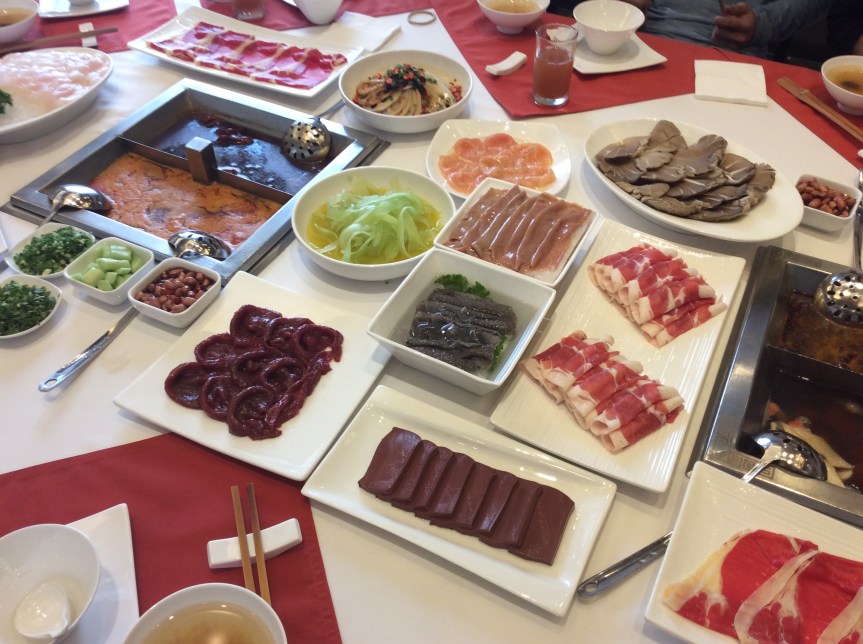
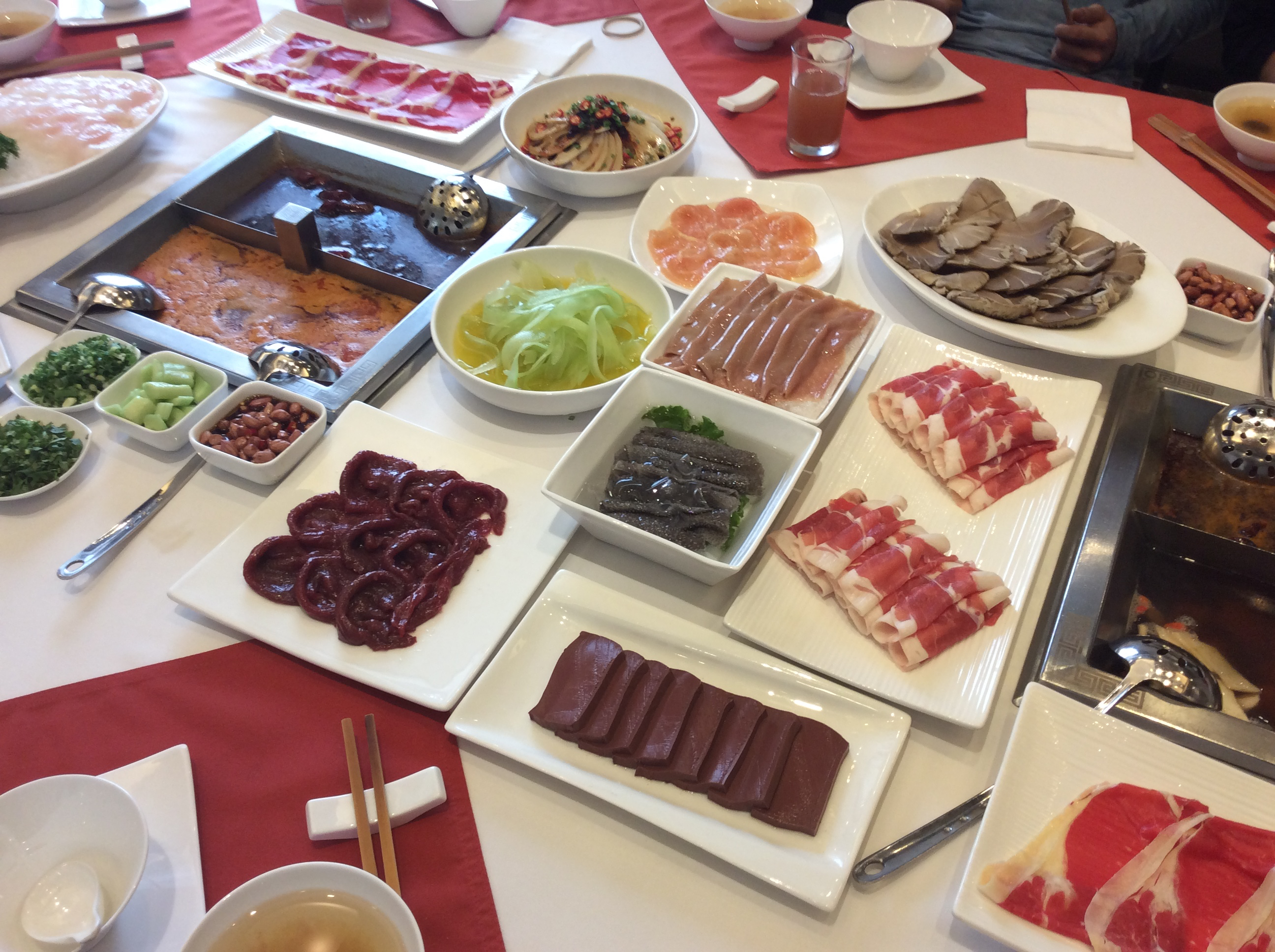
Aside from campus meals, we have enjoyed a handful of eats out at local restaurants, also organized by LoveTEFL or the schools we have had training with before we leave for our prospective cities at week’s end. Whoever said that I wouldn’t survive as a pescatarian with food allergies in China lied. Every place we have eaten at has served us more than enough to eat (and I say “us” as there are at least a dozen vegetarians, or “vegetarians” for this internship). My favorite meal to date has been a Hotpot lunch. I loved being able to cook everything in our own boiling broth pots in the middle of the table. It doesn’t get fresher than that!

A couple nights the group has headed to Helen’s Cafe, which is basically the coolest bar I’ve ever been too. It’s located in such an ideal location too, just a couple blocks from the campus. It’s frequented by backpackers and travelers alike as they serve both Western and traditional Chinese fare. There’s graffiti all over the walls and ceilings, signed by people from all over the world. Bars in Asia > Bars in America. IMG_4442

Placement

I learned that I will be placed in Tianjin, about 30 minutes by speed train from Beijing. I will be working with MaxEn, similar to a Kumon center in Canada and the States. We would be teaching afterschool hours and on the weekends, anyone from the age of 3-17 (but mostly younger children). The center we trained at was very nice. They are a very well resourced program and have everything from computer labs to interactive whiteboards we are able, and encouraged to use for our lessons.

We spent three days with MaxEn Beijing, learning about the different softwares and workbooks with lessons and activities that we had access to. We each came up with our own demo lessons to present to our centers via webcam! I did farm animal sounds. I opened with a game of duck, duck, goose, played a few games using flashcards, and ended my lesson with Old MacDonald. It was a lot of fun and the atmosphere was a lot more relaxed than when we presented lessons during training with LoveTEFL, despite the fact that this time around, we presented individually. I’m really excited to start teaching with MaxEn, although I am very sad to be parting ways from everyone in our group who is still waiting to be placed or staying in Beijing. But, I am excited to meet the teachers of Tianjin who I’ve only been able to contact through WeChat and webcam,  and also to experience a different area of China.

11949629_10153136194832547_1764420656_n

Beijing Bound: ONE WEEK

I am excited to share that one week from today, I will be flying into Beijing!!!

————-•••————

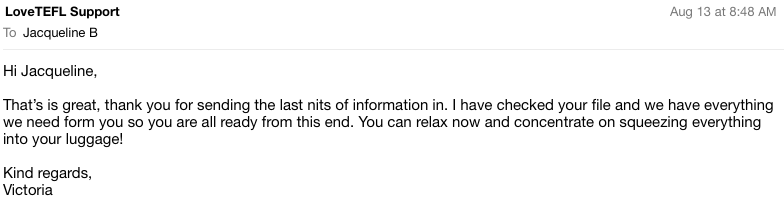
The journey to this day, where I can finally share on my blog that I’m actually leaving, hasn’t been without its obstacles. I didn’t receive my Visa until this past Wednesday, which to me, is cutting it a little close. This is the first time I’ve had to acquire a Visa for traveling, so I’m not sure if the timeline is the same if I was to visit a different country for a prolonged period. Anyways, after I had that in hand, I purchased my travel insurance (also a first for me!) and submitted both these documents to LoveTEFL (more on that in a bit), and received this email yesterday:

it's really happening!
djkaljfkh!!!!!!

Lucky for them, I’ve been packed for almost a month now, aside from some toiletries. I’ve learned that the earlier I start packing, the better. I’ve always been a planner. This trip has been in the works for about a year. I committed to going on August 22nd last summer, and August 22nd this year is when I will land in Beijing. Surreal.

Why Beijing, you ask? Well for one, I’ve never been there before. And if you know me, you know that visiting new places is a favorite hobby of mine. Adventure is out there, and I think we need to take it upon ourselves to try new things, meet new people, and explore spaces and places that are foreign to us, especially if you’re young/able/still trying to figure things out. You learn so much about yourself, other people, and other cultures while traveling, not to mention the memories you’ll make! Traveling always puts me in the happiest state of mind.

After Europe last summer, I looked into going abroad almost immediately after returning home. And that was where I learned about the benefits of teaching abroad. I did a lot of research and decided to complete a TEFL course through LoveTEFL. LoveTEFL is a UK based company who provides accredited TEFL (Teaching English as a Foreign Language) courses, as well as teaching internships such as the one I am completing, recruitment for permanent placements, and more. I was certified last December, became a US citizen in January, booked my one-way to Beijing in May (because hey, if the stars align, I’d like to spend as much time abroad as possible), finally booked a return flight home a few days ago at a price I couldn’t pass up, and now here I am: one week until I leave for Beijing, and what looks like will be total of ten months being abroad. I’m still organizing my post-China plans, but I will keep ya posted on those as best as I can.

I liked that LoveTEFL offered an internship option, so I can experience what it would be like to teach English abroad without committing to an entire year. Aside from volunteering at my middle school, I don’t have any experience teaching or commanding my own classroom. But that being said, I really enjoyed the teaching course. Lesson-planning came pretty naturally, and the course itself wasn’t hard, but I know that teaching isn’t for everyone. You have to be patient, organized, disciplined, and basically ready for anything. I know I’m in for a few surprises, but I see this all as part of the adventure that awaits.

I have a feeling this week is going to fly by. See you in seven days, Beijing. ♥